Young drivers
Driving solo once you've passed your test is an exciting time full of independence and opportunity – but it also brings with it risks.
Road traffic injuries are a leading cause of death for children and young people worldwide and young drivers are over-represented in serious and fatal collisions in Great Britain.
Below we've highlighted some of the risks young drivers face on the road and some practical steps to help reduce those dangers.
24 per cent of fatal or serious injury collisions in Britain involve 17 to 24 year olds.
You haven't yet had the chance to build up the knowhow that a more experienced driver will have, you may not be used to driving in some of the road and weather conditions you will now encounter, and driving with your peers in the car can be a dangerous distraction.
But rather than scare you away from taking to the road and developing your driving, we just want to share some practical things you can do to help you reduce these risks while you adapt to driving without an instructor by your side.
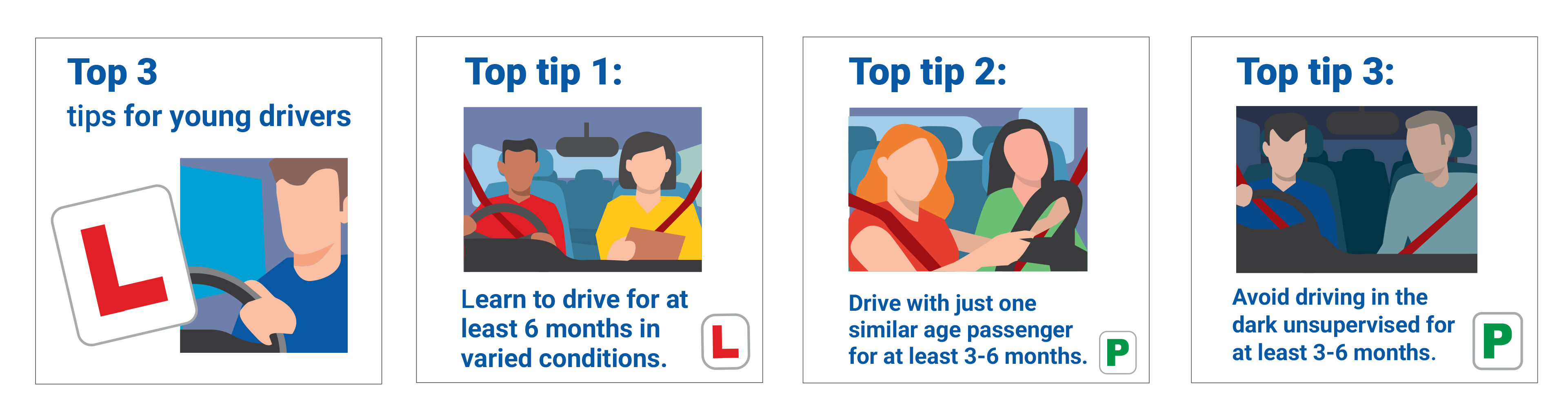
Remember the 'Fatal Four' before you drive
Mobile phone use
Never use your mobile phone while driving – it’s a distraction.
- Driving reaction times can be up to 50 per cent slower
- Your are FOUR TIMES more likely to be involved in a collision
- Stay safe and turn off your phone while driving
Penalties for driving when using a mobile phone can include:
- Minimum six points on your licence
- a fine of £200, and
- up to two years' imprisonment, plus
- if you have passed your test in the last two years, you will lose your licence
Speeding
Speed is one of the main factors in fatal road collisions. Do not exceed speed limits – and don’t treat limits as a target.
If you hit a pedestrian while driving at:
- 20mph – the pedestrian has a 95 per cent chance of survival
- 30mph – survival chance is 80 per cent
- 40mph – survival chance is 20 per cent
Fatal collisions are four times as likely on rural roads as urban roads.
The minimum penalty for speeding is a Band A fine (50 per cent of your relevant weekly income) and three penalty points added to your licence.
You could be disqualified from driving if you build up 12 or more penalty points within a period of three years.
If you have passed your test in the last two years and you build up six points or more, you will lose your licence.
Not wearing a seatbelt
Wear a seatbelt – you’re twice as likely to die in a crash without one
In a 30mph crash, a rear seat passenger will hit the front seat and anyone in it, with the force around 10 times their own body weight.
Compensation injury payments are reduced if the seatbelt was not worn.
People who choose to risk their live by not wearing a seatbelt could receive a £100 fixed penalty notice or be summoned to court to face fines up to £500.
Drink and drug driving
If you’re driving, avoid any alcohol or drugs – they can impair your judgement and reaction times.
When driving over the legal limit, driver reaction times can be up to 30 per cent slower.
- One in six fatal collisions involve drivers over the legal limit to drive
- One in five fatal collisions involve a drug driver
Driving or attempting to drive while above the legal limit or unfit through drink or drugs carries a maximum penalty of six months' imprisonment, a fine of up to £5,000 and a minimum 12 months driving ban.
An endorsement for a drink-driving offence remains on a driving licence for 11 years, so it is 11 years before a convicted driver will have a 'clean' licence again.
Will you step up and become a Hazard Hero?
You've got your licence, but are you ready for the road? Test your observation skills and find out if you have what it takes to become a Hazard Hero in the interactive hazard-perception game for new drivers.
YOUR MISSION:
Get you and some mates safely to a house party, just a short drive away…!